
The Science Behind Loyalty Programs: Do They Actually Work?
2026-03-10
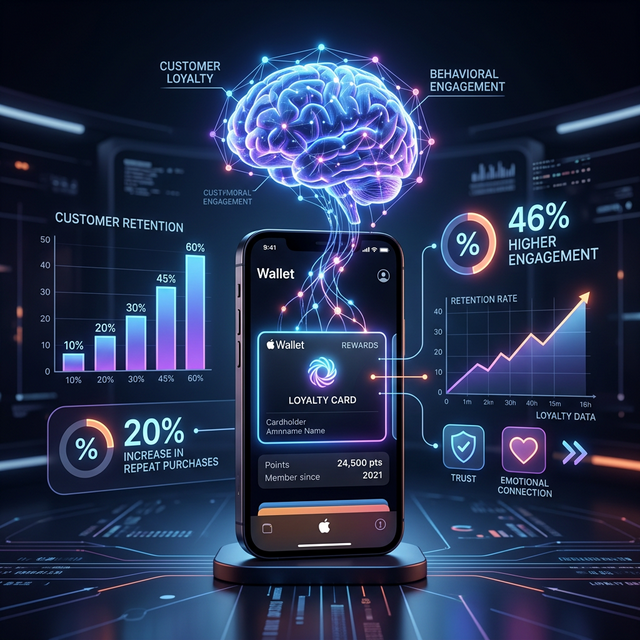
Do you have a wallet stuffed with half-completed loyalty cards? More relevantly, does your business give out loyalty cards and stamps? Or are you considering doing so?
In building Paperless Perks, I’ve spent a lot of time reading about loyalty schemes, the evidence for and against them, and when they’re actually useful. It turns out, there is a deep well of academic research that explains exactly why some loyalty programs succeed while others fail.
Who Actually Benefits from Loyalty?
Not every business needs a loyalty scheme. There are two key questions you must ask to determine if customer loyalty should be your priority:
1. Purchase Frequency
How often do individual customers shop with you? If you're a coffee shop, you hope for multiple visits a week. If you're an estate agent, it might be once a decade. The higher the frequency, the more valuable a loyalty scheme becomes.
2. Market Competition
How many similar competitors do you have? In a crowded market, loyalty acts as an artificial switching cost, keeping customers coming back to you instead of the shop next door.
The Top 3 Scientific Effects of Loyalty
The Goal Gradient Effect
As people get closer to a goal, they accelerate their efforts towards it. The University of Chicago found a 20% increase in speed of purchase for the last few stamps compared to the first few. By making customers conscious of being at 7/10 stamps, you motivate increased return visits.
The Reciprocity Effect
Humans have a natural urge to give back when they receive something. NYU researchers found that giving customers a small, unexpected gift (even just a yogurt or keychain) led to a 46.6% increase in spend. Loyalty rewards tap into this same psychological leverage.
Increasing Switching Costs
Acquiring a new customer is up to 25x more expensive than keeping an existing one. A loyalty card raises the "cost" of switching to a competitor. When a customer thinks, "I could try that new place... but I've got 8/10 stamps here," your retention strategy has won.
🚀 Pro Tip: Hack the Goal Gradient Effect
Don't start customers at zero. If you want a 10-stamp card, give them a 12-stamp card with 2 stamps already filled in "just because". Psychologically, they are already 16% of the way to their goal, making them statistically much more likely to complete the card.
Get a free digital design for your programWhy Digital (Apple & Google Wallet) Always Wins
The psychology only works if the customer is aware of the program. Paper cards fail because they are hidden in wallets or lost at home. Digital cards in Apple and Google Wallet change the game:
Daily Brand Visibility
Your brand is seen ogni and again alongside their bank cards and tickets.
Proximity Alerts
Their phone automatically reminds them to visit when they are near your shop.
Real-time Feedback
Push notifications when they earn a stamp keep the Goal Gradient top-of-mind.
Apply the Science to Your Business
Join hundreds of small businesses using Paperless Perks to boost retention with native Apple and Google Wallet loyalty cards.